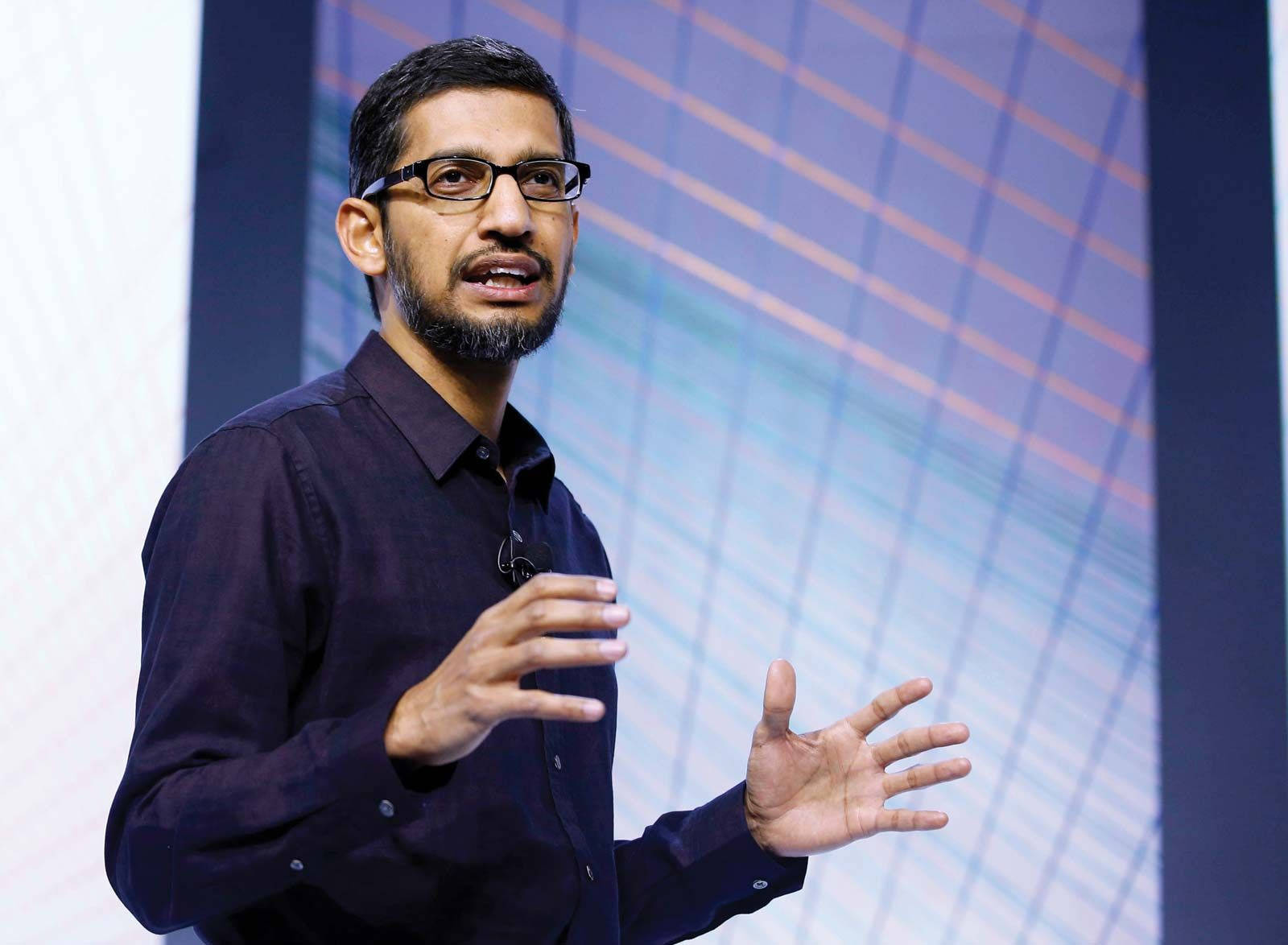
Artificial Intelligence (AI) has become one of the most transformative technologies of the 21st century, changing the way people search for information, communicate, work, learn, and solve complex problems. From virtual assistants and language translation to healthcare innovations and business automation, AI is influencing nearly every aspect of modern life. Behind many of these advancements are visionary leaders who recognize the technology’s potential while also understanding the responsibility that comes with developing it. Among those leaders, Sundar Pichai has emerged as one of the most influential voices shaping the future of Artificial Intelligence.
As the Chief Executive Officer of Google and its parent company, Alphabet Inc., Sundar Pichai oversees one of the world’s largest AI research and development ecosystems. Under his leadership, Google has accelerated innovation in machine learning, generative AI, cloud computing, language models, healthcare research, and productivity tools that serve billions of users across the globe.
Unlike viewing AI as just another technological breakthrough, Pichai has consistently described it as one of the most important technological shifts in human history. He believes Artificial Intelligence has the potential to improve lives, increase productivity, solve scientific challenges, and make information more accessible than ever before. At the same time, he has repeatedly emphasized that AI must be developed responsibly to ensure that its benefits reach society while minimizing potential risks.
Sundar Pichai’s vision combines technological innovation with ethical responsibility, making him one of the leading figures driving the future of Artificial Intelligence.
Recognizing Artificial Intelligence as a Transformational Technology
Long before generative AI became a global conversation, Sundar Pichai recognized that Artificial Intelligence would fundamentally reshape the technology industry. During interviews and company events, he has frequently compared AI’s long-term impact to revolutionary innovations such as electricity and the internet.
This perspective has influenced Google’s strategy for many years. Rather than treating AI as a separate product, Pichai encouraged integrating machine learning across nearly every Google service. Search, Maps, Gmail, Photos, Android, Cloud, Workspace, and YouTube have all benefited from AI-powered improvements that make these platforms more intelligent and user-friendly.
His leadership reflects a belief that AI should enhance everyday experiences instead of existing only as advanced research. By embedding intelligent capabilities into products that billions of people already use, Google has made Artificial Intelligence accessible to users without requiring technical expertise.
Pichai believes that AI should improve daily life by making technology smarter, faster, and more helpful for everyone.
Making Google an AI-First Company
One of the most significant strategic decisions under Sundar Pichai’s leadership was Google’s transition toward becoming an “AI-first” company. Instead of focusing solely on traditional software development, the organization began prioritizing Artificial Intelligence across research, product design, and long-term innovation.
This transformation required major investments in computing infrastructure, research laboratories, engineering talent, and machine learning technologies. Google expanded its AI capabilities while encouraging teams across different departments to incorporate intelligent systems into their products.
The AI-first strategy also strengthened collaboration between Google’s research teams and product divisions. Scientists developing advanced algorithms could work closely with engineers responsible for building consumer applications, allowing new discoveries to reach users more efficiently.
By placing Artificial Intelligence at the center of Google’s long-term strategy, Pichai positioned the company to remain one of the world’s leading innovators in AI technology.
Transforming Google Search with Artificial Intelligence
Google Search remains one of the company’s most important products, serving billions of searches every day. Under Pichai’s leadership, AI has significantly improved how search understands language, context, and user intent.
Modern search systems use advanced machine learning models to better interpret natural language questions instead of relying only on matching keywords. This enables users to receive more relevant, accurate, and personalized information.
Artificial Intelligence also helps Google identify spam, improve search quality, translate languages, recognize images, and deliver richer search experiences. These improvements demonstrate how AI operates behind the scenes to enhance one of the world’s most widely used digital services.
Pichai’s vision ensures that Google Search continues evolving from a keyword-based engine into an intelligent system capable of understanding human language more naturally.
Driving Innovation in Generative AI
The rapid growth of generative Artificial Intelligence has transformed how people create content, analyze information, write software, and solve problems. Under Sundar Pichai’s leadership, Google has significantly expanded its work in large language models and generative AI technologies.
Google’s AI research teams have contributed important advances in natural language processing, multimodal learning, and generative models that support products across the company’s ecosystem. These technologies enable users to generate text, summarize information, create images, write code, and interact with AI in more conversational ways.
Pichai has emphasized that generative AI should function as a helpful assistant that enhances human creativity and productivity rather than replacing human intelligence.
He views generative AI as a powerful tool that enables individuals and businesses to accomplish more while keeping people at the center of decision-making.
Expanding Artificial Intelligence Through Google Cloud
Artificial Intelligence is transforming businesses just as rapidly as it is changing consumer technology. Under Pichai’s leadership, Google Cloud has expanded its AI capabilities to help organizations develop intelligent applications, automate workflows, analyze large datasets, and improve operational efficiency.
Businesses across healthcare, finance, retail, manufacturing, education, and public services increasingly rely on cloud-based AI solutions to improve customer experiences and decision-making.
By integrating advanced AI models into enterprise cloud services, Google enables organizations of all sizes to access technologies that previously required enormous research budgets.
Pichai believes that democratizing AI allows businesses, researchers, and developers to innovate more quickly while solving real-world challenges.
Supporting Scientific Discovery Through AI
Artificial Intelligence is no longer limited to digital products. Under Sundar Pichai’s leadership, Google’s research organizations have explored how AI can accelerate scientific discovery in medicine, biology, climate research, and engineering.
Machine learning systems help researchers analyze enormous volumes of scientific data that would otherwise require years of manual analysis. AI assists in identifying patterns, predicting outcomes, and supporting complex research efforts that contribute to medical and environmental progress.
Although scientific breakthroughs require collaboration across universities, governments, and research institutions, Google’s investments demonstrate Pichai’s belief that Artificial Intelligence should contribute to solving humanity’s most significant challenges.
He consistently emphasizes that AI should improve lives by advancing knowledge as well as technology.
Balancing Innovation with Responsibility
As Artificial Intelligence becomes increasingly powerful, questions surrounding ethics, privacy, transparency, and safety continue to grow. Sundar Pichai has repeatedly acknowledged that technological progress must be accompanied by responsible governance.
Google has established AI principles that guide research and product development, emphasizing fairness, accountability, privacy, security, and societal benefit. While implementing responsible AI remains an ongoing challenge across the industry, Pichai has consistently argued that companies developing advanced AI must recognize their broader responsibilities.
He has also supported collaboration between governments, researchers, businesses, and international organizations to establish appropriate frameworks for AI governance.
Pichai believes that responsible innovation is essential to maintaining public trust in Artificial Intelligence.
Preparing the Workforce for the AI Era
Artificial Intelligence is transforming the nature of work across many industries. Rather than viewing AI only as a replacement for human labor, Sundar Pichai frequently discusses its potential to increase productivity by helping people perform tasks more efficiently.
He has encouraged investments in digital education, technical training, and AI literacy to ensure workers can adapt to changing workplace requirements. According to Pichai, lifelong learning will become increasingly important as intelligent technologies continue evolving.
This perspective reflects his broader belief that technology should empower individuals rather than leave them behind.
Preparing people with new skills is just as important as developing advanced AI systems.
Encouraging Global Access to Artificial Intelligence
One of Sundar Pichai’s long-term goals has been making technology accessible to people regardless of geography or economic background. Artificial Intelligence plays an important role in this mission.
Google continues improving translation systems, accessibility tools, educational platforms, and mobile technologies that help users communicate, learn, and access information more effectively.
AI-powered features support individuals with disabilities through speech recognition, image descriptions, real-time captioning, and language assistance. These innovations demonstrate how Artificial Intelligence can create more inclusive digital experiences.
Pichai believes the true value of AI lies in expanding opportunities for everyone rather than benefiting only a small portion of society.
Leading Through Calm and Visionary Leadership
Technology leadership involves far more than introducing new products. It requires guiding organizations through periods of rapid change while balancing innovation, regulation, competition, and public expectations.
Sundar Pichai is widely respected for his calm, collaborative leadership style. Rather than making decisions based solely on short-term market trends, he focuses on long-term technological progress supported by careful planning and responsible development.
His leadership encourages engineers, researchers, designers, and business teams to work together toward shared goals that benefit users worldwide.
His steady leadership has helped Google remain one of the world’s leading innovators during one of the fastest periods of technological transformation in history.
The Future of Artificial Intelligence Under Sundar Pichai’s Vision
Artificial Intelligence continues evolving at an extraordinary pace. Future developments are expected to improve healthcare diagnostics, scientific research, education, environmental sustainability, software development, robotics, cybersecurity, and countless other industries.
Under Sundar Pichai’s leadership, Google continues investing in advanced language models, multimodal AI systems, cloud infrastructure, intelligent productivity tools, and responsible AI research. These efforts aim to make technology more capable while ensuring it remains safe, useful, and accessible.
Pichai has consistently stated that Artificial Intelligence represents an opportunity to solve problems that have challenged humanity for generations. However, realizing this potential requires thoughtful leadership, international cooperation, and ethical innovation.
His vision suggests that the future of AI should be defined not only by technological capability but also by its ability to improve lives responsibly and inclusively.
Conclusion
Sundar Pichai has become one of the most influential leaders in Artificial Intelligence by combining technological ambition with a deep commitment to responsible innovation. His leadership has guided Google’s transformation into an AI-first company while expanding the role of machine learning across products used by billions of people every day.
From enhancing Google Search and advancing generative AI to supporting scientific discovery, cloud computing, and digital accessibility, Pichai’s influence extends far beyond corporate success. His emphasis on ethical development, transparency, education, and long-term thinking reflects an understanding that Artificial Intelligence must serve society as well as technology.
The future of Artificial Intelligence will be shaped not only by faster algorithms and more powerful computers but also by leaders who recognize the importance of responsibility, collaboration, and human-centered innovation. Sundar Pichai’s approach demonstrates that lasting technological progress is achieved when innovation is guided by integrity, inclusivity, and a commitment to creating solutions that benefit people around the world.
Leave a Reply